Laser Dentistry
GENTLE, MODERN DENTAL CARE FOR GROWING SMILES
Gentle, Compassionate Dental Care Designed Just for Kids.
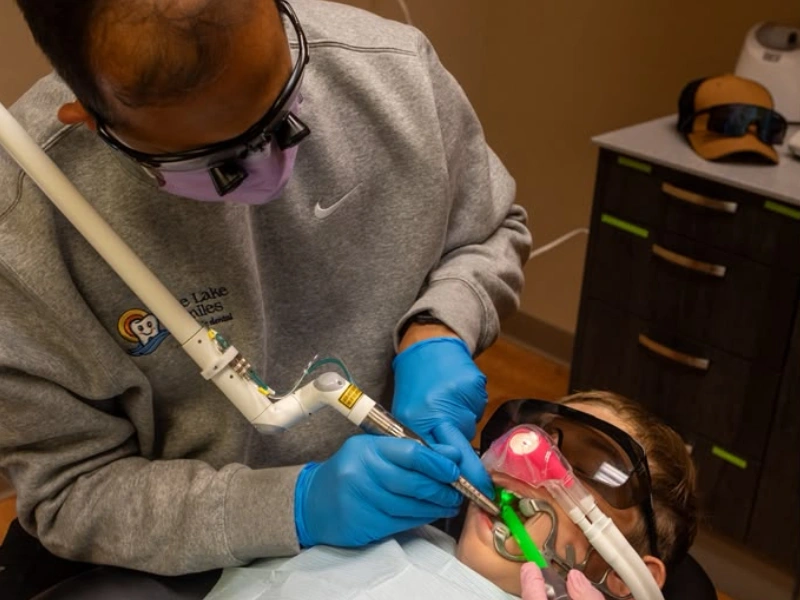
At Blue Lake Smiles, we strive to make dental visits as comfortable and reassuring as possible for children. Laser dentistry offers a modern approach to certain dental procedures, using focused light energy to treat specific areas of the mouth. Depending on your child’s dental needs, this technology may help support precise treatment while minimizing discomfort during certain procedures.
Our team takes the time to understand your child’s needs and explain the available treatment options to your family. We want every child to feel supported, confident, and cared for throughout their dental experience.
Why Choose Blue Lake Smiles for Laser Dentistry?
At Blue Lake Smiles, we believe modern dental technology should support personalized, compassionate care. When laser treatment is appropriate, it may offer benefits for certain procedures while helping us focus on your child’s comfort and oral health.
Precise & Targeted Treatment
Dental lasers allow specific areas of tissue to be treated with precision. Depending on the procedure, this may help limit the impact on surrounding healthy tissue.
A Comfort-Focused Approach
Some laser procedures may involve less noise, vibration, or pressure than conventional techniques. This can help create a more comfortable experience for children who feel nervous about dental treatment.
Potentially Less Bleeding
When used for appropriate soft-tissue procedures, dental lasers can help control bleeding during treatment, supporting a more manageable treatment experience.
Personalized Care for Every Child
Every child's needs are different. We carefully evaluate your child's oral health and discuss suitable treatment options with you, helping you understand what to expect before proceeding.
What Can Laser Dentistry Help Treat?
Laser technology may be useful for several types of pediatric dental procedures, depending on the clinical situation and the equipment available.
Soft-Tissue Procedures
Lasers may be used for selected procedures involving the gums and other soft tissues in the mouth.
Tongue-Tie and Lip-Tie Evaluation
When a tongue-tie or lip-tie is affecting oral function, a dental professional may evaluate whether a release procedure is appropriate. Laser technology may be an option in selected cases.
Gum Tissue Treatment
Certain gum-related concerns may benefit from laser-assisted treatment when clinically indicated.
Selected Dental Treatments
Depending on the type of laser and the dental concern, laser technology may assist with specific procedures involving tooth structure or other oral tissues.
Our team will explain whether laser treatment is appropriate for your child and discuss the expected benefits, limitations, and alternatives before treatment.
1. What is laser dentistry?
Laser dentistry uses focused light energy to assist with certain dental procedures involving the teeth or soft tissues of the mouth. It can be used in selected situations as an alternative or addition to conventional dental techniques.
2. Is laser dentistry safe for children?
Dental lasers can be used safely in appropriate clinical situations when operated by trained dental professionals using suitable protective measures. Your child’s dentist will assess their needs and determine whether laser treatment is appropriate.
3. Does laser dentistry mean my child will not need anesthesia?
Not necessarily. Some laser procedures may require less local anesthesia, while others may still need it to keep your child comfortable. The decision depends on the procedure and your child’s individual needs.
4. Does laser dentistry help reduce discomfort during treatment?
Some laser procedures may involve less vibration, bleeding, or tissue irritation. However, comfort and recovery vary depending on the treatment being performed and the child’s response.
5. Is laser dentistry suitable for every child?
No. Laser dentistry is appropriate for certain procedures, but it is not the best option for every dental concern. Our team will evaluate your child’s oral health and discuss the most suitable treatment options with you.
Why Laser Dentistry Matters
For some children, the thought of dental treatment can feel overwhelming. Unfamiliar sounds, sensations, and instruments may create anxiety, making a comfortable and reassuring approach especially important. Laser dentistry can provide another option for certain dental procedures, depending on the child’s needs and the treatment being considered.
Dental lasers use focused light energy to work on specific areas of the teeth or soft tissues in the mouth. In selected cases, this technology may allow treatment with less irritation to surrounding tissues and may reduce bleeding during certain gum procedures. Some treatments may also require less local anesthesia, although this depends on the procedure and the individual child.